

The phrase “a @nixcoders.org blog” is often misunderstood as just another developer blog. Much too broad at this stage not just what the content is but how, why and by whom it is written.
A @nixcoders.org blog is like a collective knowledge repository, more than a simple blog. The contribution of individuals within the community and pragmatic, experience-based documentation combine to provide an evolving resource, rather than something static.
Table of Contents
What Defines a @nixcoders.org Blog
At a structural level, a @nixcoders.org blog is characterized by shared authority, technical depth, and practical usability. It differs significantly from personal blogs or generic tutorial sites.
Core Characteristics
| Attribute | Description | Why It Matters |
|---|---|---|
| Multi-author system | Content is contributed by multiple developers | Builds diverse expertise |
| Technical focus | Emphasis on coding, tooling, and systems | Attracts targeted audience |
| Practical orientation | Focus on real-world problems | Improves engagement |
| Community feedback loop | Readers and contributors interact | Enhances credibility |
| Consistency in tone | Unified style across contributors | Strengthens brand identity |
The result is a platform that scales knowledge rather than just publishing isolated articles.
Why This Model Works in the Canadian
With a high percentage of self-taught, bootcamp-graduated, and career-changers among Canadian developers, demand is a little unique.
Audience Needs in Canada
| Audience Segment | Primary Need | Content Preference |
|---|---|---|
| Beginners | Clear explanations | Step-by-step tutorials |
| Career switchers | Practical skills | Real-world examples |
| Intermediate developers | Problem solving | Debugging guides |
| Professionals | Efficiency | Advanced workflows |
A @nixcoders.org blog aligns with these needs by prioritizing clarity and application over abstraction.
Content Types That Perform Best
Content performance in this niche is strongly tied to intent. High-ranking posts typically solve specific, immediate problems.
High-Performing Content Formats
| Content Type | Description | SEO Value | Example Topic |
|---|---|---|---|
| Tutorials | Step-by-step instructions | High | Setting up development environments |
| Debugging guides | Fixing specific errors | Very High | Resolving dependency conflicts |
| Tool breakdowns | Explaining tools and workflows | Medium-High | Using Nix for reproducibility |
| Case studies | Real-world implementations | High authority | Standardizing team environments |
| Concept explainers | Simplifying technical ideas | Medium | Understanding package management |
A @nixcoders.org blog succeeds when it prioritizes problem-solving over general information.
The Strategic Mistake Most Blogs Make
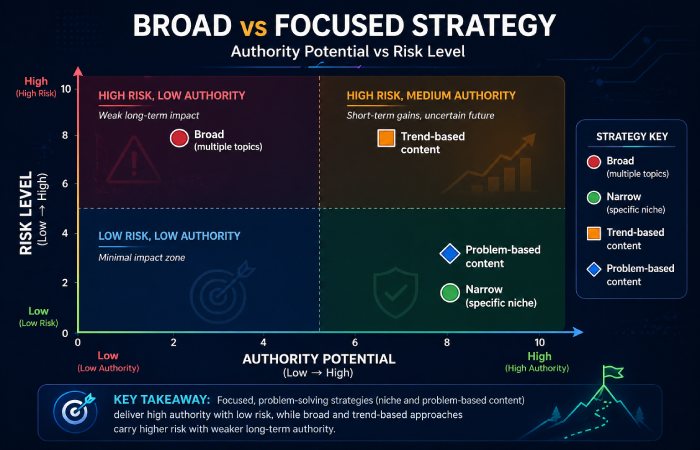
A major reason many developer blogs fail is lack of focus. They attempt to cover too many topics without building authority in any one area.
Broad vs Focused Strategy
| Approach | Outcome | Risk Level |
|---|---|---|
| Broad (multiple topics) | Low authority | High |
| Narrow (specific niche) | Strong authority | Low |
| Trend-based content | Temporary traffic | High |
| Problem-based content | Sustainable traffic | Low |
Starting with an even more precise starting point than is proposed above is one tactic, but an even better tactic is beginning even narrower and widening it later.
Step-by-Step Framework to Build a @nixcoders.org Blog
Building a successful blog requires a structured approach. The following framework reflects proven practices adapted for this model.
Step 1: Define a Clear Niche
| Question | Example Answer |
|---|---|
| Who is the audience? | Beginner developers in Canada |
| What problem do they face? | Debugging common coding issues |
| What is your angle? | Simplifying technical problems |
Clarity at this stage determines long-term success.
Step 2: Develop Problem-Focused Content
| Weak Topic | Strong Topic |
|---|---|
| Introduction to Nix | Fix “works on my machine” errors using Nix |
| Learn JavaScript | Debug JavaScript runtime errors step-by-step |
| DevOps basics | Set up CI/CD pipelines without configuration issues |
Each post should solve a clearly defined problem.
Step 3: Use a Repeatable Content Structure
| Section | Purpose |
|---|---|
| Introduction | Define the problem |
| Explanation | Why the issue occurs |
| Solution | Step-by-step fix |
| Example | Real implementation |
| Summary | Key takeaway |
Consistency improves readability and SEO performance.
Step 4: Build Trust Signals
| Trust Element | Implementation |
|---|---|
| Real examples | Include working code |
| Transparency | Explain limitations |
| Consistency | Publish regularly |
| Accuracy | Verify technical details |
Trust is critical for both users and search engines.
Step 5: Maintain Publishing Discipline
| Frequency | Outcome |
|---|---|
| Daily (low quality) | Poor engagement |
| Weekly (high quality) | Strong growth |
| Irregular | Weak authority |
Consistency outweighs volume in long-term SEO performance.
SEO Strategy for Ranking Success
To outperform competitors, a @nixcoders.org blog must align with both traditional SEO and AI-driven search systems.
Keyword Strategy
| Keyword Type | Example | Intent |
|---|---|---|
| Problem keywords | Fix dependency error | High |
| Comparison keywords | Nix vs Docker | Medium |
| Beginner queries | What is Nix | Medium |
| Advanced queries | Nix reproducibility workflow | Low but valuable |
Content Layering Strategy
| Level | Content Type | Goal |
|---|---|---|
| Beginner | Guides | Attract traffic |
| Intermediate | Tutorials | Build engagement |
| Advanced | Case studies | Establish authority |
This layered approach ensures coverage across user levels.

Monetization Pathways
Monetization should be approached strategically and realistically.
Revenue Timeline
| Timeframe | Focus | Revenue Source |
|---|---|---|
| 0–3 months | Content creation | None |
| 3–6 months | Traffic growth | Affiliate links |
| 6–12 months | Authority building | Sponsorships |
| 12+ months | Scaling | Courses, consulting |
A @nixcoders.org blog generates revenue through trust rather than immediate traffic.
Content Planning Framework
A structured content plan ensures consistency and growth.
Monthly Content Plan Example
| Week | Topic Type | Example |
|---|---|---|
| Week 1 | Tutorial | Setting up development environment |
| Week 2 | Debugging | Fixing runtime errors |
| Week 3 | Tool guide | Using Nix effectively |
| Week 4 | Case study | Real project implementation |
Common Pitfalls to Avoid
| Mistake | Impact | Solution |
|---|---|---|
| Writing generic content | Low rankings | Focus on specific problems |
| Ignoring beginners | Limited audience | Simplify explanations |
| Overcomplicating topics | High bounce rate | Use clear examples |
| Inconsistent posting | Weak authority | Follow a schedule |
Avoiding these mistakes significantly improves success probability.
Editorial Perspective: What Actually Makes This Work
A blog on @nixcoders.org is not measured by the amount of text it contains or how frequently it’s updated; technical depth is certainly a factor but not the only one. A good Nix Coders blog excels through a synergy of clarity, ease of use and regularity.
Top Nix Coders blogs do not aim to amaze, but rather to reduce friction on the learning path. They can demystify complex, technical issues in ways that provide concrete, learnable, yet non-simplistic steps.
This point is particularly relevant for the Canadian learners who value practical results and outcomes more than theoretical knowledge.
Closing Analysis: Is This Blog Model Worth It?
A @nixcoders.org blog is a viable and scalable model for building authority in the developer space, especially in Canada. However, success depends on disciplined execution rather than intent.
Success Factors
| Factor | Importance |
|---|---|
| Niche clarity | Critical |
| Content quality | Critical |
| Consistency | High |
| SEO strategy | High |
| Community engagement | Medium |
Failure Indicators
| Indicator | Consequence |
|---|---|
| Lack of focus | No authority |
| Generic content | Low traffic |
| Inconsistency | Poor growth |
| No strategy | Unsustainable |
Conclusion
A @nixcoders.org blog represents a shift from traditional blogging to structured knowledge sharing. It’s not about publishing more, but about publishing better and more valuable. It educates beginners, helps intermediate users solve their problems and enables advanced users to be efficient.
The window of opportunity is in its execution. A targeted niche and problem solving approach plus constant publishing can outsell the average dev blog and earn its author a lifetime of authority. If done right a blog on @nixcoders.org is not just a platform for content-it’s a lifetime asset for the dev community.