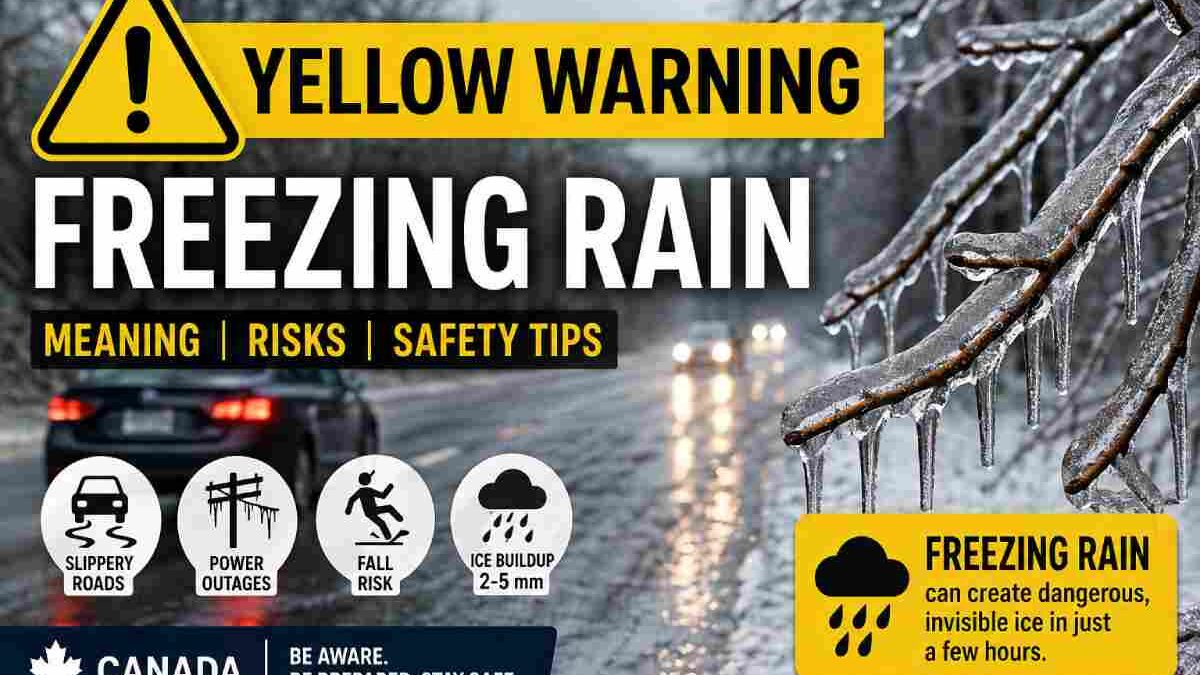
A yellow warning – freezing rain in Canada is often misunderstood. Many assume it’s a mild alert, something you can ignore. That assumption is risky.
Under the new color coded weather conditions alert system announced by Environment and Climate Change Canada (ECCC), even a yellow weather warning signals real, measurable hazards, especially when freezing rain is involved.
Freezing rain is one of Canada’s most troublesome winter threats. Invisible coatings of ice are laid down on the roads, on the trees, on the walkways and on power lines. Accidents, power failures and structural damage occur as a result of this.
Table of Contents
What is a Freezing Rain Yellow Warning in Canada?
According to the Government of Canada, a yellow rain weather alert means:
- Hazardous weather may cause damage, trouble, or health impacts
- Impacts are moderate, localized, and temporary
- It is the most common alert level
A yellow warning is not “safe weather.” It is “low-to-moderate impact, high probability” weather, which often causes the highest number of daily incidents (slips, crashes, minor outages).
Understanding “Freezing Rain” in the Canadian
Freezing rain occurs when:
- Snow melts into rain in a warm air layer
- Then re-freezes instantly upon contact with cold surfaces
Why It’s Dangerous
Unlike snow:
- It’s invisible (black ice)
- It creates smooth, glass-like surfaces
- It builds up on infrastructure
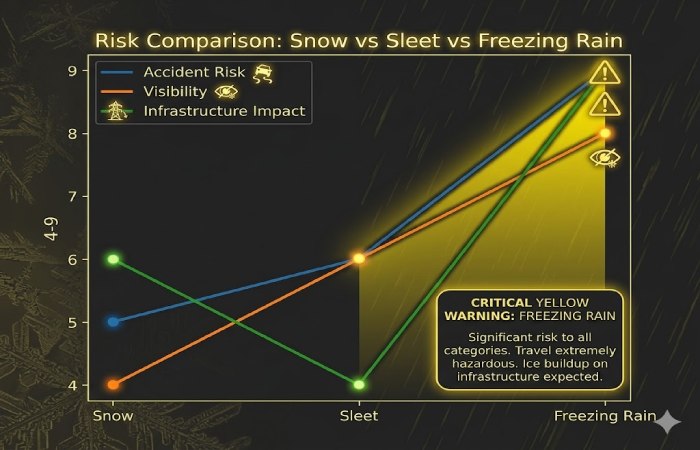
Risk Comparison – Snow vs Sleet vs Freezing Rain
| Weather Type | Visibility | Surface Grip | Infrastructure Impact | Typical Risk Level |
|---|---|---|---|---|
| Snow | Visible | Moderate | Low–Moderate | Medium |
| Sleet | Visible | Slippery | Low | Medium |
| Freezing Rain | Often invisible | Extremely low | High (ice buildup) | High even in yellow alerts |
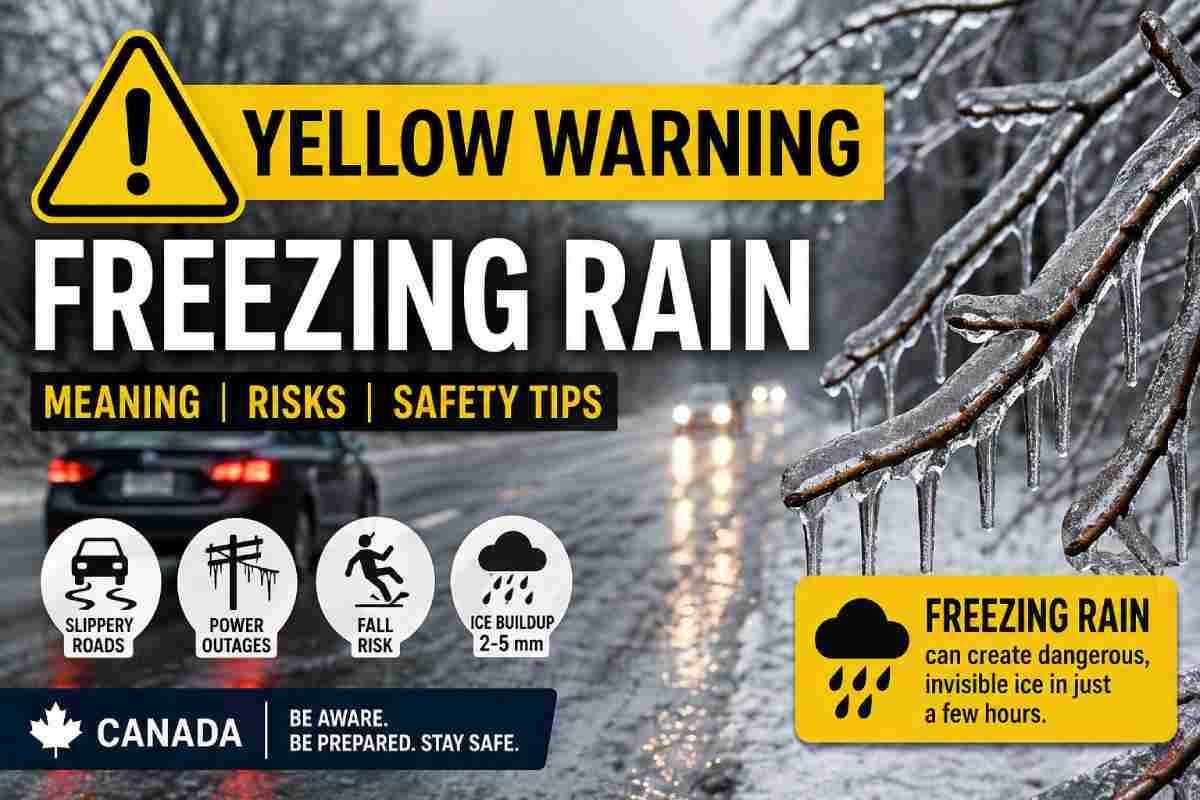
What “Yellow Warning – Freezing Rain” Specifically Means
When ECCC issues a yellow warning for freezing rain, it typically indicates:
- Light to moderate ice accumulation expected
- Short-duration freezing rain event
- Localized damage (not a broad catastrophe)
Possible hazards:
- Slippery streets and sidewalks
- Minor power disruptions
- Tree branch icing
| Signal | What It Means Practically |
|---|---|
| Yellow | Prepare, monitor, adjust plans |
| Freezing rain | Expect ice, not snow |
| Combined meaning | Travel disruption likely, but not catastrophic |
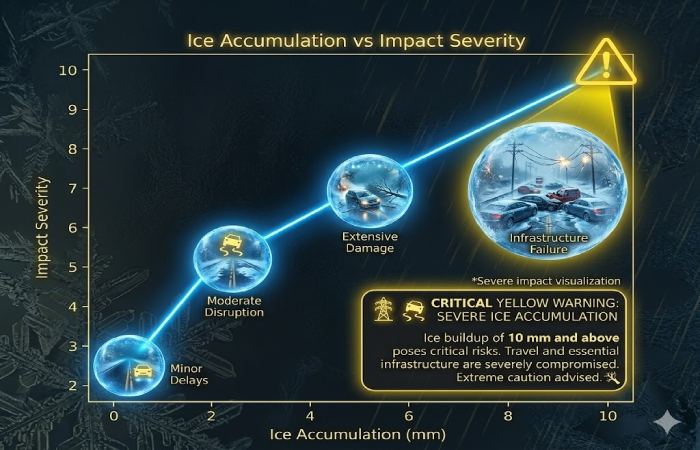
Ice Accumulation vs Impact Severity
| Ice (mm) | Impact Level |
|---|---|
| 0–2 mm | Low |
| 2–5 mm | Moderate (Yellow Warning) |
| 5–10 mm | High (Orange) |
| 10+ mm | Severe (Red) |
Even small ice amounts (2–5 mm) significantly affect safety.
Yellow vs Orange vs Red: Freezing Rain Severity Levels
Canada’s system is impact-based—not just weather intensity.
| Alert Level | Freezing Rain Scenario | Impact Level |
|---|---|---|
| Yellow | Light icing, short duration | Local disruption |
| Orange | Significant ice buildup | Widespread outages, dangerous travel |
| Red | Major ice storm | Life-threatening, infrastructure collapse |
- Yellow = “Be aware”
- Orange = “Take action”
- Red = “Immediate danger”
Why Yellow Warning – Freezing Rain Warnings Are Often Underestimated
1. “Yellow = minor” bias
People associate yellow with caution, not danger.
2. Short duration ≠ , low risk
Even 1–2 hours of freezing rain can:
- Shut down highways
- Cause multi-car accidents
- Ice aircraft and rail systems
3. Localized doesn’t mean safe
A yellow warning may affect:
- One city
- One highway corridor
But it still causes serious incidents
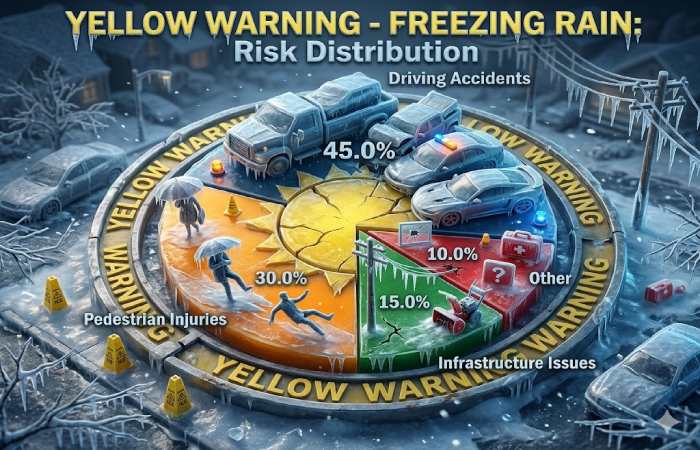
Primary Risks of Freezing Rain
1. Road Accidents
- Black ice is nearly invisible
- Braking distance increases drastically
2. Pedestrian Injuries
- Slips and falls spike during freezing rain events
3. Power Outages
- Ice buildup on lines and branches
4. Travel Delays
- Flights, trains, and buses affected
Risk Breakdown
| User Type | Risk Level | Key Concern |
|---|---|---|
| Pedestrians | High | Slips and falls |
| Drivers | Very High | Loss of traction |
| Businesses | Medium | Staff delays |
| Utilities | Medium | Local outages |
| Emergency Services | High | Response delays |
How to Respond to a Yellow Warning – Freezing Rain Warning
1. For Beginners (Essential Actions)
- Avoid unnecessary travel
- Walk slowly, wear grip footwear
- Check local forecasts frequently
2. For Drivers
- Reduce speed significantly
- Increase following distance
- Avoid sudden braking
3. For Homeowners
- Salt walkways of the house
- Charge devices
- Prepare for minor outages
Advanced Insight: Why Canada Uses Impact-Based Alerts
Canada’s system focuses on impact, not just weather intensity.
This means:
- The same freezing rain amount may be:
- Yellow in urban areas
- Orange in rural or vulnerable regions
Expert Perspective
This model improves:
- Public response accuracy
- Emergency preparedness
- Risk communication clarity
Case Example: Yellow Warning – Freezing Rain Event
| Factor | Example |
|---|---|
| Duration | 2–4 hours |
| Ice Accumulation | Light (trace to a few mm) |
| Impact | Slippery commute, minor delays |
| Severity Level | Yellow |
Common Mistakes People Make
- Ignoring alerts because it’s “only yellow”
- Driving normally instead of cautiously
- Not preparing for minor outages
- Underestimating black ice risk
Final Verdict
Yellow Warning -Freezing rain in Canada isn’t just a simple advisory-it’s a proactive risk warning. The damage will often be localized and of short duration, but the inherent danger of freezing rain can’t be overstated. Its ability to deposit virtually invisible, highly treacherous ice can still pose a risk during a yellow warning. The simplest strategy is to take yellow warnings as real advice, and not white noise.